spotify multi-select: a UX case study
INDUSTRY:
UX DESIGN
TOOLS:
FIGMA, PROCREATE
YEAR:
2025
EXPERIENCE:
INTUITIVE DESIGN, IxD, INTUITIVE DESIGN, PLATFORM CONSISTENCY
about.
As a long-time Spotify user, I realized that while music discovery is seamless, playlist creation on mobile lacks the same fluidity. Adding or organizing songs requires repetitive actions and too many steps, making spontaneous playlist building almost impossible. This project explores a more intuitive, efficient way for users to select and manage multiple songs at once, streamlining the playlist creation experience and aligning it with Spotify’s otherwise effortless listening journey.
As a long-time Spotify user, I realized that while music discovery is seamless, playlist creation on mobile lacks the same fluidity. Adding or organizing songs requires repetitive actions and too many steps, making spontaneous playlist building almost impossible. This project explores a more intuitive, efficient way for users to select and manage multiple songs at once, streamlining the playlist creation experience and aligning it with Spotify’s otherwise effortless listening journey.
challenge.
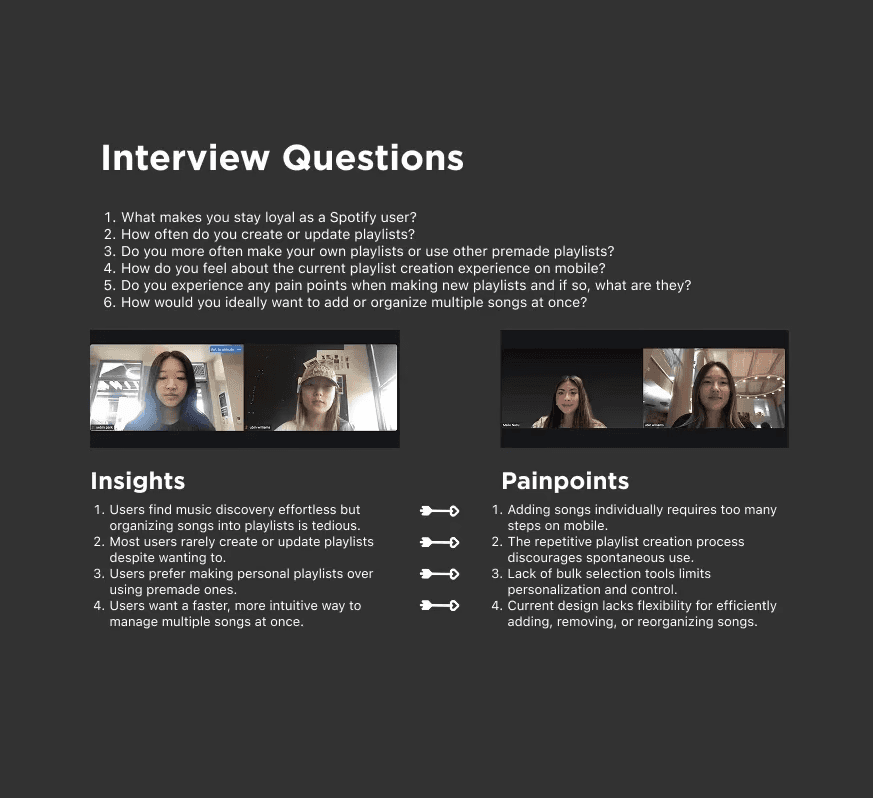
Along with me, other Spotify users carried these qualms regarding playlist creation. The insights revealed that users value personalization but are discouraged by the inefficiency of Spotify’s current playlist creation flow, highlighting the need for a faster, more intuitive way to manage multiple songs at once.
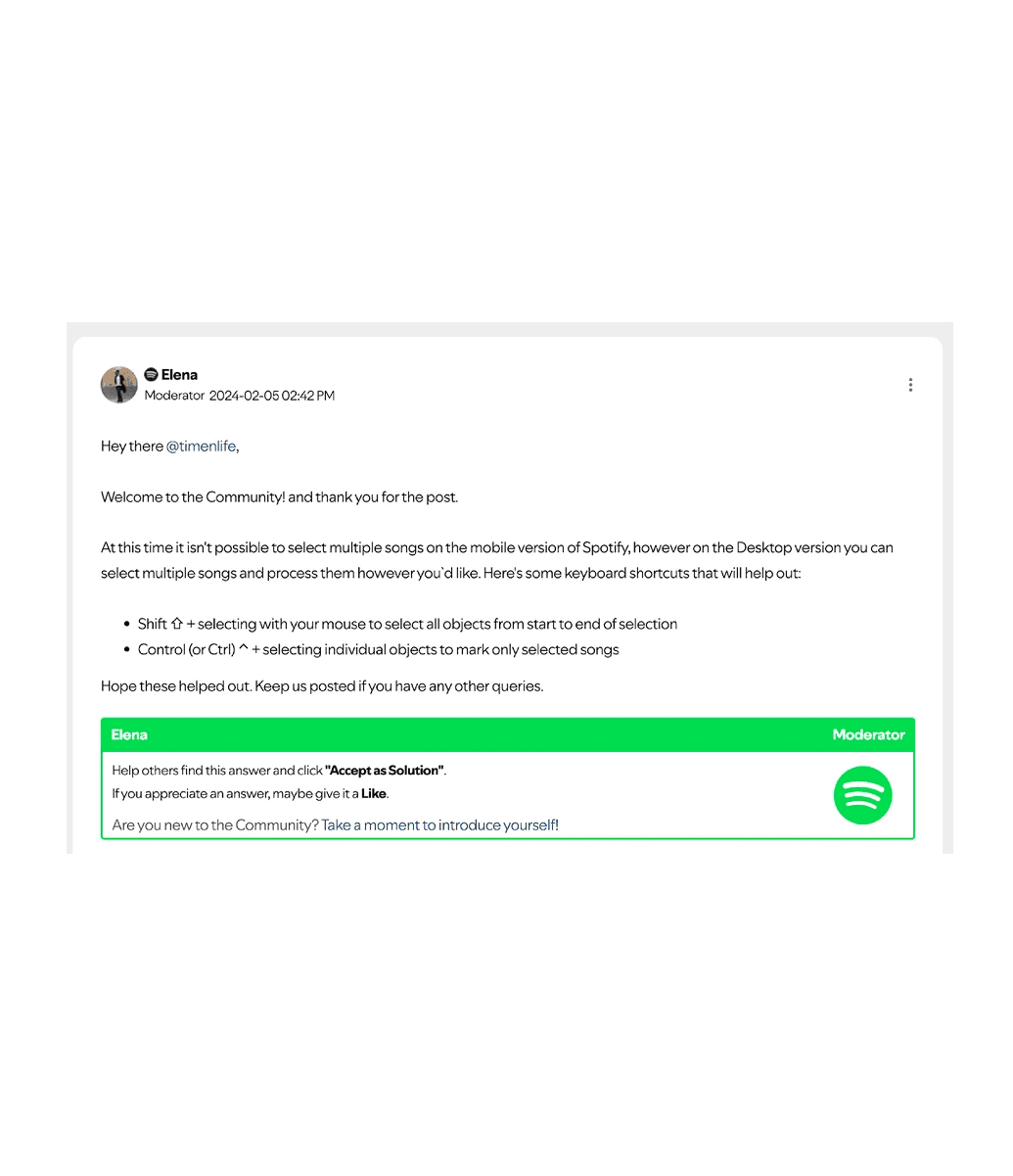
Currently, Spotify does allow users to select multiple songs, but this functionality is limited to the desktop version of the app. As confirmed by Spotify’s community support:
Selecting two songs that are far apart automatically selects all songs in between, making it difficult to only pick specific tracks across different parts of a playlist.
The already limited feature is not even available on mobile, where the majority of users engage with Spotify.
“The company has been telling its brand advertisers that mobile now accounts for the majority of listening, with 42% on phones…”(link)
Along with me, other Spotify users carried these qualms regarding playlist creation. The insights revealed that users value personalization but are discouraged by the inefficiency of Spotify’s current playlist creation flow, highlighting the need for a faster, more intuitive way to manage multiple songs at once.
Currently, Spotify does allow users to select multiple songs, but this functionality is limited to the desktop version of the app. As confirmed by Spotify’s community support:
Selecting two songs that are far apart automatically selects all songs in between, making it difficult to only pick specific tracks across different parts of a playlist.
The already limited feature is not even available on mobile, where the majority of users engage with Spotify.
“The company has been telling its brand advertisers that mobile now accounts for the majority of listening, with 42% on phones…”(link)
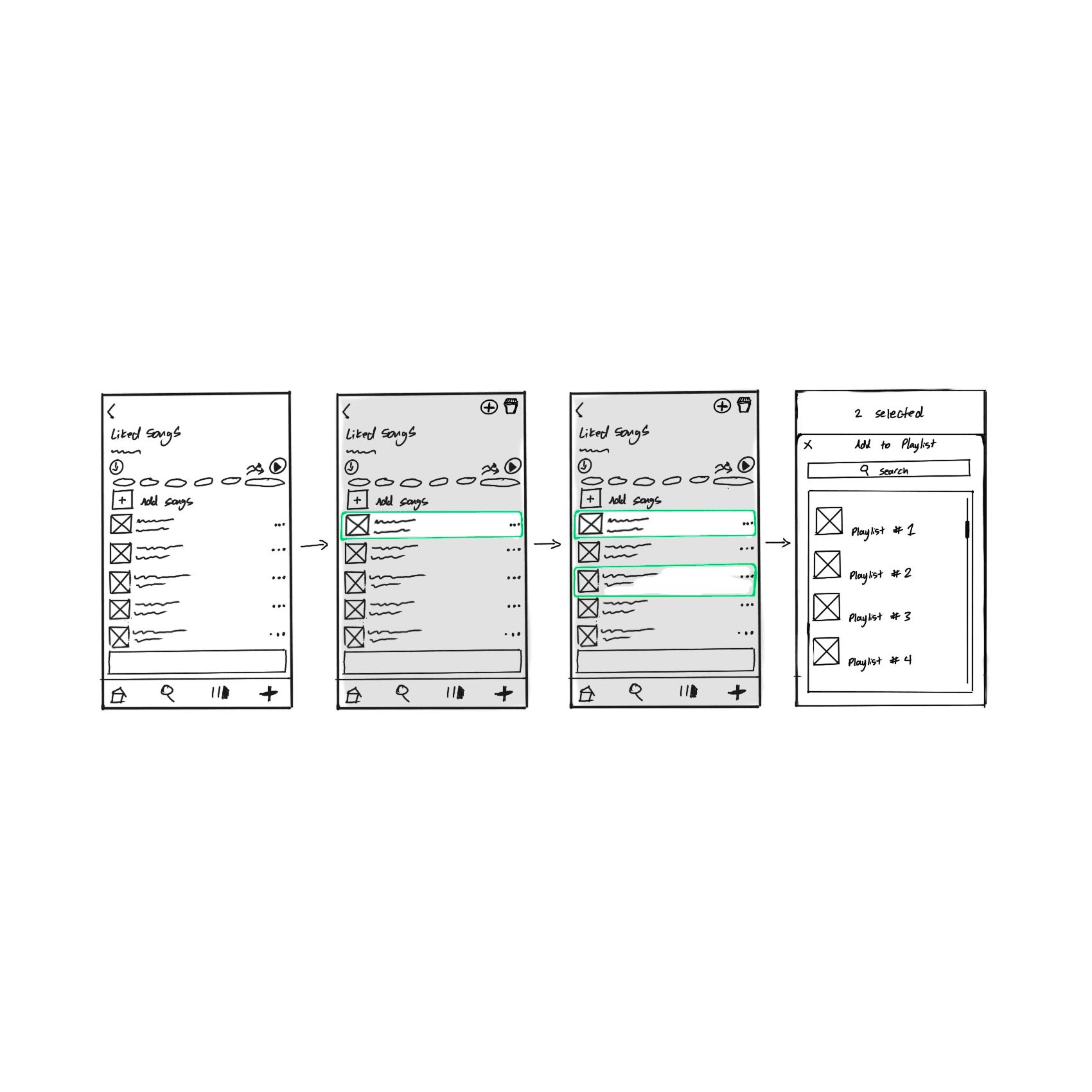
Exploring a flow that showcases an intuitive press and hold feature for selecting multiple songs
Exploring a flow that showcases an intuitive press and hold feature for selecting multiple songs
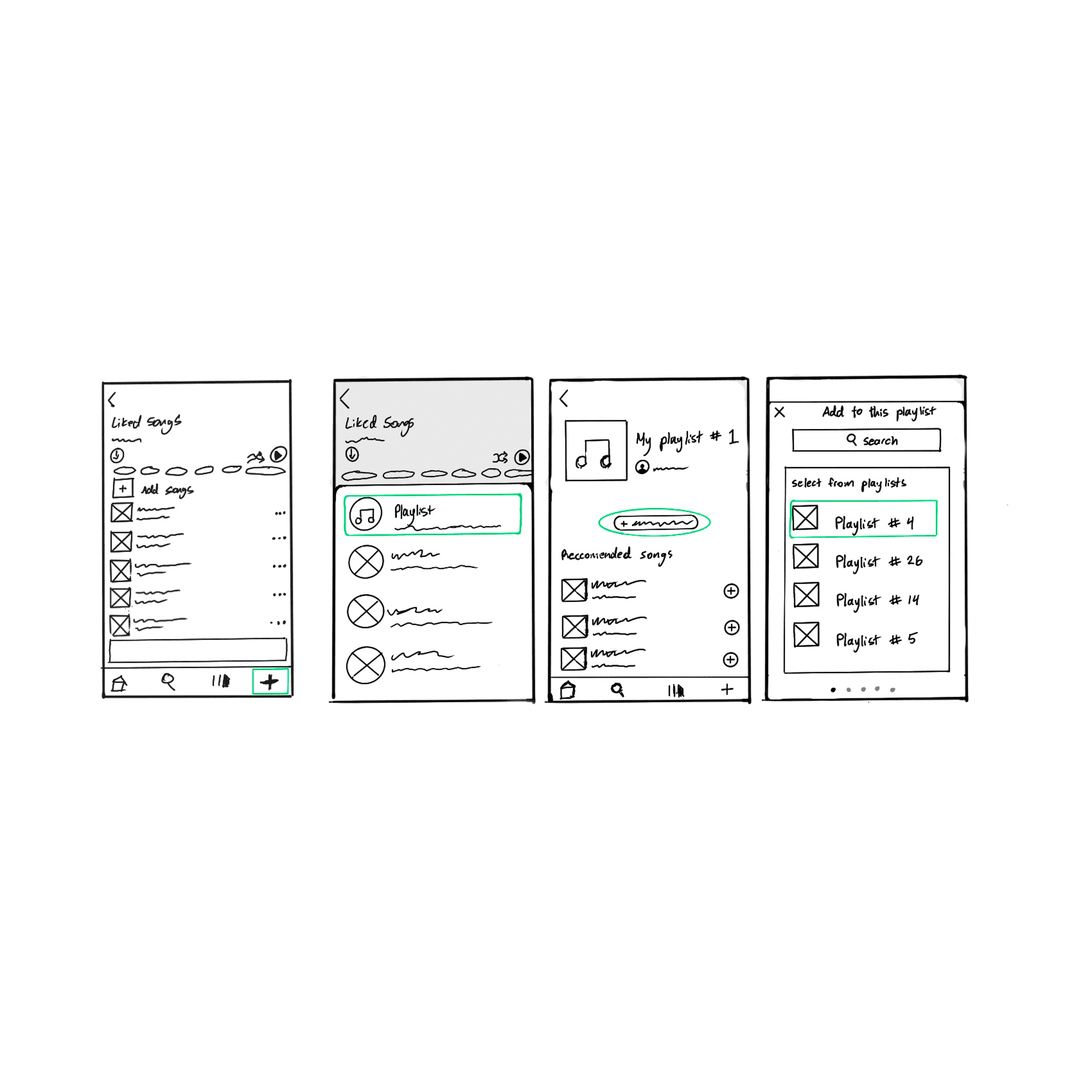
Exploring a flow that would allow for grabbing songs from other playlists to add them to a new playlist.
Exploring a flow that would allow for grabbing songs from other playlists to add them to a new playlist.
the final feature.
Demonstrating the final prototypes
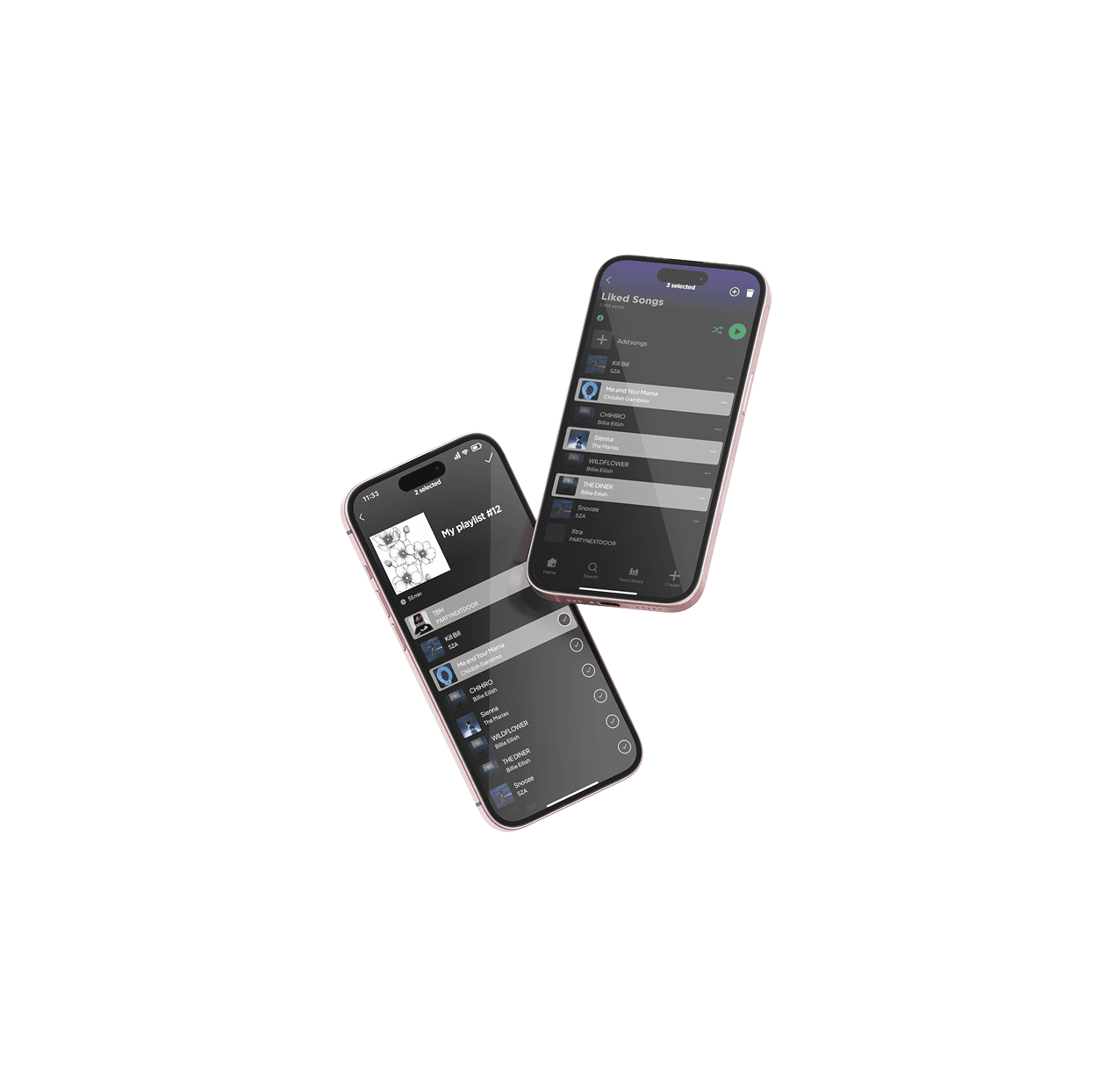
The final feature demonstrates the ability to select multiple songs at once without selecting every song in between. It is intuitive with a press and hold to select action, allowing for more efficiency when adding or removing songs from playlists. This in turn will boost user engagement and playlist creation within the app.
Selecting multiple songs from another playlist.
Selecting multiple songs from another playlist.
Intuitive selection feature demonstration.
Intuitive selection feature demonstration.
outcomes.
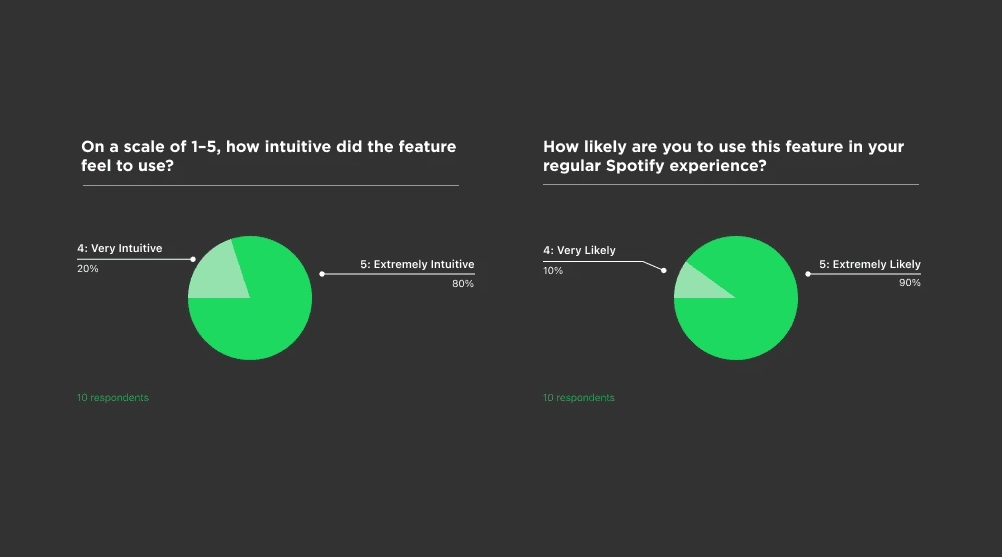
Almost 90% of users said that they were extremely likely to use this feature!
If this feature were to get implemented, some metrics that I would like to track would be average time to create a playlist, feature adoption rate, and playlist creation frequency.
Takeaways
1. Designing with Intent
I learned the importance of aligning usability with user intent. Good design should feel invisible; Users shouldn’t have to think about how to complete a task, it should just make sense intuitively.
2. Friction Impacts Engagement
Even small inefficiencies can discourage users from taking action. At times, I overrefine my work for the sake of presentation rather than clarity. Sometimes it is better to go simpler and really focus on making the simple action as perfect as possible.
3. Thinking Holistically
To design something holistically, I learned that it starts with deeply understanding the problem, the psychology behind user actions, and the small details that shape behavior. Even minor and "insignificant" inefficiencies in a flow can lead to larger and more significant drops in engagement over time.
Almost 90% of users said that they were extremely likely to use this feature!
If this feature were to get implemented, some metrics that I would like to track would be average time to create a playlist, feature adoption rate, and playlist creation frequency.
Takeaways
1. Designing with Intent
I learned the importance of aligning usability with user intent. Good design should feel invisible; Users shouldn’t have to think about how to complete a task, it should just make sense intuitively.
2. Friction Impacts Engagement
Even small inefficiencies can discourage users from taking action. At times, I overrefine my work for the sake of presentation rather than clarity. Sometimes it is better to go simpler and really focus on making the simple action as perfect as possible.
3. Thinking Holistically
To design something holistically, I learned that it starts with deeply understanding the problem, the psychology behind user actions, and the small details that shape behavior. Even minor and "insignificant" inefficiencies in a flow can lead to larger and more significant drops in engagement over time.